



Simplify Shaft Keyway Machining with TungMeister VVFH
A Smarter Process from Drilling to Peripheral Finishing
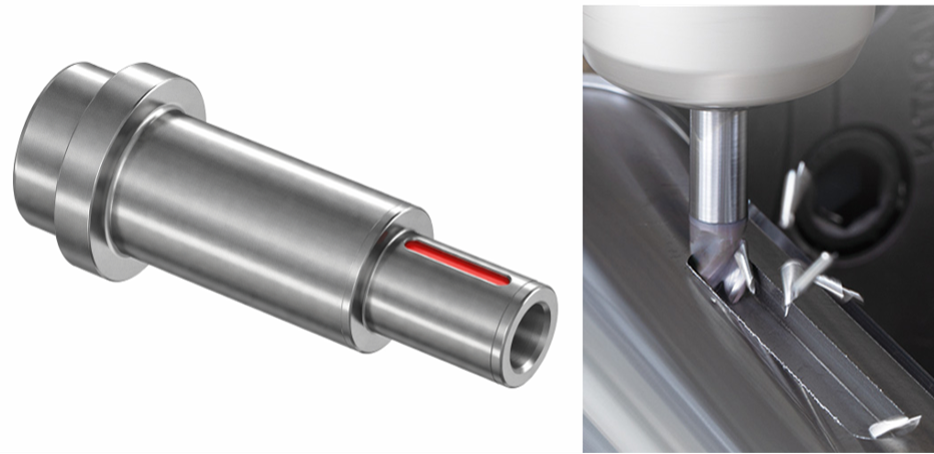
For shaft keyway machining, common methods include ramping with an end mill or drilling a pilot hole before machining the slot with an end mill.
But is that machining method really optimal?
Ramping often requires a long toolpath. Using separate drills and end mills reduces the load on each tool, but increases the number of tools and tool changes.
The TungMeister multifunctional VVFH head is a
three-flute square end mill with enhanced drilling capability.
It can drill directly at the starting position, move laterally to machine the inside of the slot, and then proceed to shoulder milling for peripheral finishing.
In other words, VVFH is not simply an “end mill that can drill.” It is a
tool designed to comprehensively rethink the process, tooling, and toolpath used for shaft keyway machining.
What You Will Learn in This Article
- Why shaft keyway machining tends to require more processes and tools
- How VVFH connects drilling, slot milling, and peripheral finishing
- Technologies that support VVFH drilling and slot-milling performance
- How to choose between a high-rigidity shank and an integrated ER collet shank
- Customer application examples demonstrating process integration, longer tool life, and stable machining
- Machining conditions to check when considering VVFH
- Summary
1. Have Conventional Shaft Keyway Machining Processes Become the Unquestioned Norm?
For shaft keyways, particularly closed-end pocket shapes, the tool cannot enter from the side.
Therefore, the method used to reach the required machining depth has a significant impact on machining time and the number of tools required.
The following three methods are commonly used.
Method 1: Ramping with an End Mill
The end mill enters the workpiece at an angle and gradually cuts down to the specified depth.
It then moves laterally to machine the inside of the slot, followed by shoulder milling around the periphery for finishing.
Although this method limits the number of tool changes, it requires sufficient entry distance to reach the machining depth.
For deep slots, the ramping path becomes longer and may prevent reductions in machining time.
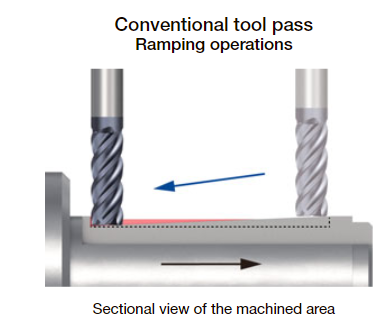
Method 2: Repeated Shallow Cuts and Lateral Feed Movements
The axial depth of cut is set to a small value, and the inside of the slot is machined through repeated Z-axis cuts and lateral feed movements.
Although this makes it easier to reduce the load on the tool, it increases the number of passes.
When peripheral finishing is also included, the machining time required for each keyway tends to become longer.
Method 3: Drilling a Pilot Hole and Machining the Slot with an End Mill
A drill is used to create a pilot hole to the required machining depth.
The tool is then changed to an end mill, which machines the inside of the slot and performs shoulder milling around the periphery for finishing.
This method reduces both the ramping distance and the entry load on the end mill, but it creates the following challenges.
- Both a pilot-hole drill and an end mill are required
- Tool changes are required
- More tool pockets and driven-tool units are required
- Tool offset and tool-life management are required for each tool
- Tool inventory and setup work increase
DILEMMA
Reducing the number of tools increases the toolpath length, while shortening the toolpath increases the number of tools
VVFH resolves this trade-off.
2. VVFH Connects Drilling to Peripheral Finishing
VVFH is a three-flute square end mill with center-cutting edges that enable drilling.
It can drill directly in the Z direction at the machining start position.
After reaching the specified depth, it can move laterally to machine the inside of the slot.
It can then proceed directly to shoulder milling around the keyway periphery for finishing.
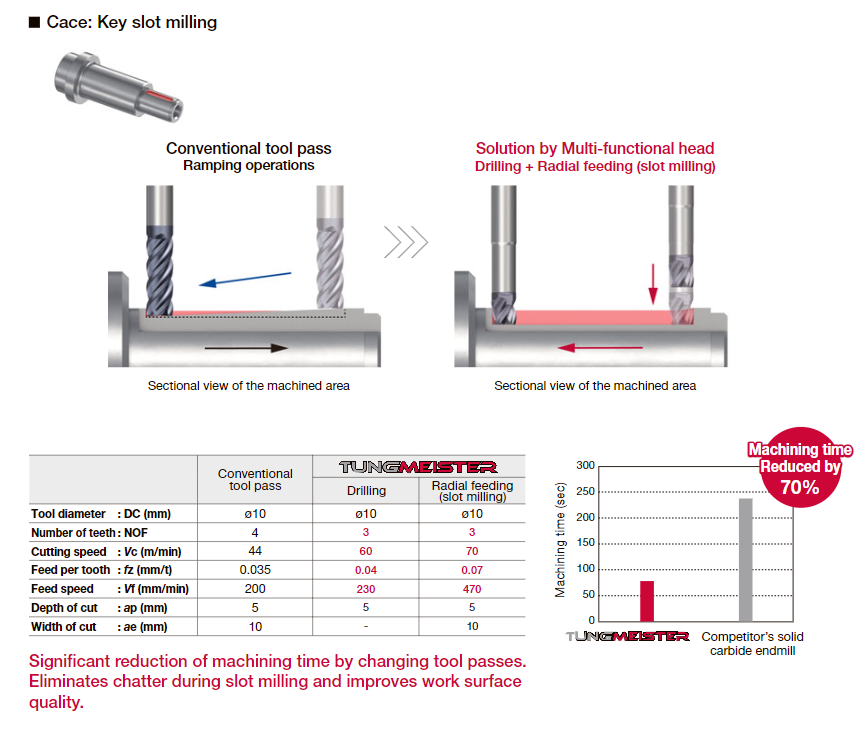
Comparison of Machining Methods
Conventional Ramping Method
→
Lateral feed inside the slot
→
Peripheral shoulder finishing
Conventional Drill-and-End-Mill Method
→
Tool change
→
End-mill slot machining
→
Peripheral shoulder finishing
Machining with VVFH
→
Lateral slot machining
→
Peripheral shoulder finishing
POINT
VVFH is a tool that transforms the keyway toolpath
The value of VVFH is not limited to adding drilling capability to a conventional end mill.
Its greatest advantage is the ability to replace a process based on ramping or multiple tools with a
continuous machining method consisting of drilling, lateral feed, and peripheral finishing.
Machining-Time Improvement Example
Keyway Machining on an S45C Shaft
Conventional ramping:
240 seconds
→ With VVFH:
75 seconds
(source: internal documentation)
3. Three Technologies Supporting Stable VVFH Machining
Drilling and slot machining differ in both the direction of the load applied to the tool and the conditions under which chips are evacuated.
VVFH incorporates technologies that enable these different machining operations to be performed with a single tool.
Feature 1: Three Center-Cutting Edges for Drilling
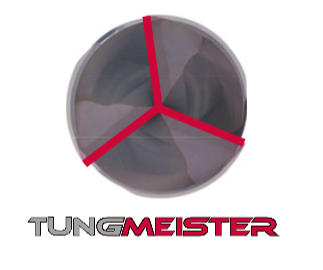
VVFH features three center-cutting edges.
During drilling, all three cutting edges engage in the cut, distributing the load across the cutting edges.
Because the cutting edges remain functional at the center of the tool, VVFH can enter directly in the Z direction from the machining start position and then transition to lateral feed.
Feature 2: 150% Flute Volume Compared with the Conventional Design
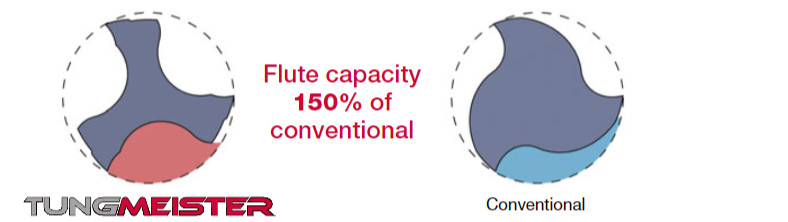
During drilling, the tool is surrounded by the workpiece, making the space available for evacuating generated chips particularly important.
VVFH uses large chip pockets and provides
150% of the flute volume of the conventional design
(source: internal product documentation).
This structure reduces chip accumulation during drilling and facilitates a smooth transition to subsequent lateral feed machining.
This large flute volume not only benefits drilling but also
contributes significantly to improved chip evacuation during full-slot machining.
In full-slot operations such as keyway machining, the entire tool diameter is engaged in the cut, producing a large volume of chips simultaneously.
Greater flute volume makes it more difficult for chips to accumulate inside the pockets and prevents increases in cutting load caused by chip recutting.
This enables
consistently stable machining from drilling through slot machining.
Feature 3: Chatter Resistance with Variable Lead Geometry
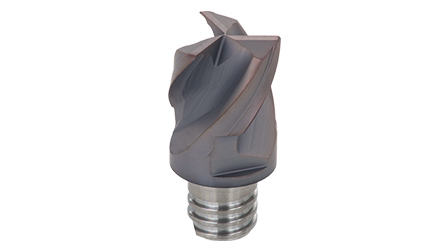
During lateral slot machining, the entire tool diameter is engaged in the cut, resulting in high cutting loads and a greater tendency for vibration to occur.
VVFH employs a variable-lead design.
Its chip-evacuation performance and chatter resistance support toolpaths that transition from drilling to lateral feed in keyway and pocket machining.
THREE TECHNOLOGIES
Three Center-Cutting Edges × Large Flute Volume × Variable Lead
These three technologies work together to enable one tool to perform the two different machining operations of drilling and slot machining.
4. Selecting the Right Shank to Maximize VVFH Performance
In shaft keyway machining, it is important not only to select the appropriate VVFH head but also to ensure sufficient rigidity throughout the entire tool assembly, including the shank.
During full-slot machining and peripheral shoulder milling, radial loads are applied to the tool.
As a basic principle, the tool assembly should be
as short and as thick as possible.
VSSD High-Rigidity Shank
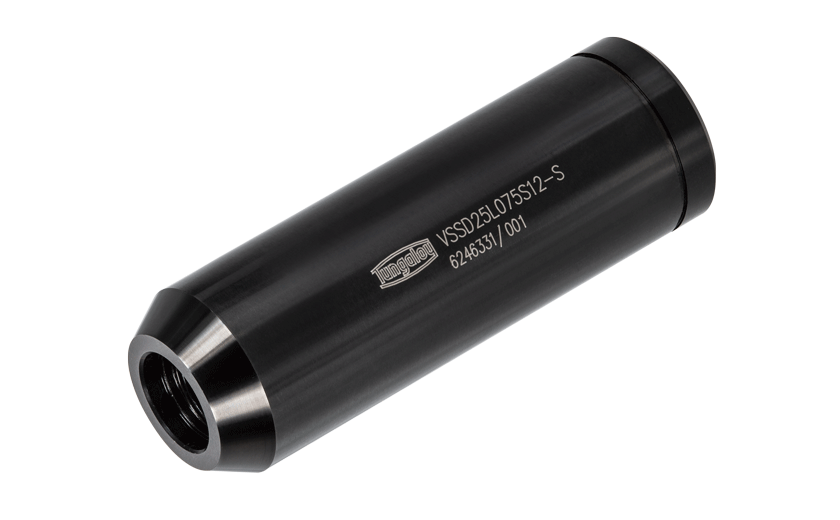
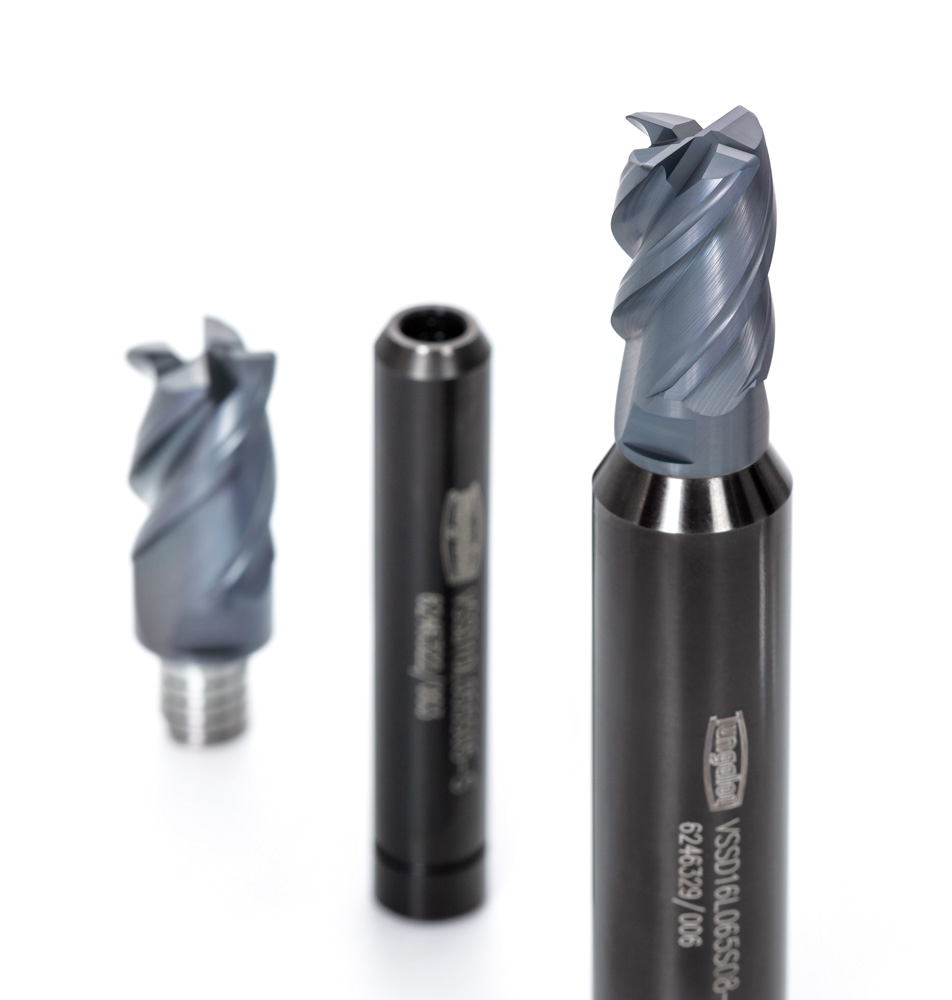
VSSD uses a straight shank that is larger in diameter than the head connection thread, increasing the rigidity of the entire tool assembly.
It reduces tool deflection in applications subject to high radial loads, such as full-slot keyway machining and machining long slots.
In an internal slot-machining test, it demonstrated
chatter-free machining at up to three times the depth of cut of the solid end mill used for comparison.
Applications where VSSD is effective:
- Full-slot keyway machining
- Machining long slots
- High-load machining of materials such as SCM steel
- Applications experiencing chatter or tool deflection
- Applications with unstable dimensions during peripheral shoulder finishing
VER Integrated ER Collet Shank
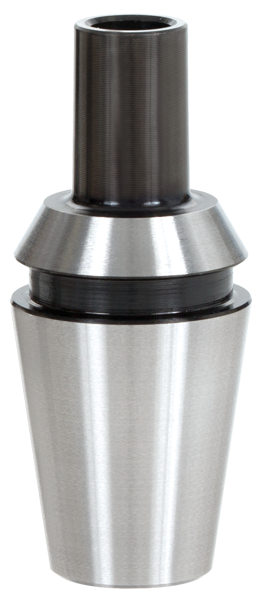
This shank is effective in environments that use machine-side ER collets, including lathes, multitasking machines, and Swiss-type automatic lathes.
Its integrated ER-collet-compatible design shortens the tool overhang.
It helps suppress deflection and chatter in environments where rigidity is difficult to maintain, such as driven-tool units and compact machines.
Compatible with ER11, ER16, ER20, and ER25.
Shank Selection Guidelines
| Short overhang is required on a lathe or multitasking machine | VER integrated collet shank |
|---|---|
| Greater rigidity is required against radial loads during slot machining | VSSD high-rigidity shank |
| There is no interference and a larger-diameter shank can be used | Prioritize the shortest and thickest possible configuration |
5. Customer Application Examples
The following customer application examples demonstrate the capabilities of VVFH.
See how VVFH delivered improvements in
process integration, tool life, and machining stability.
Case 1
SCM440 EV Motor Shaft: Six Times More Components by Switching from an HSS End Mill
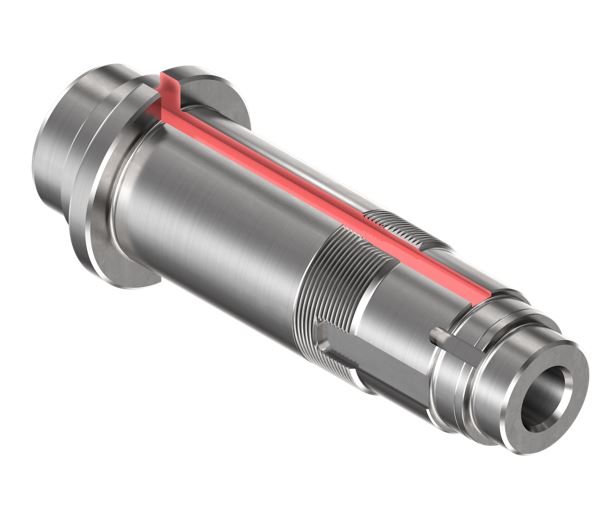
Application Details
- Component: Motor shaft for EV and HEV drive systems
- Workpiece material: SCM440, 27–35 HRC
- Machine: Lathe / external coolant supply
- Operation: Keyway machining with a slot width of 10 mm, slot length of 400 mm, and depth of 4.5 mm
Challenges
- The existing HSS end mill had a short tool life and required replacement after machining five components
- The failure mode was cutting-edge fracture, creating a need for longer tool life
- The 400 mm slot length resulted in a long machining distance
Cutting Condition Comparison
| Conventional HSS End Mill | VVFH + VSSD | |
|---|---|---|
| Tool and shank | ø8 HSS end mill, 2 flutes | VVFH0800S03R04S05 VSSD10L055S05-S |
| Head material and grade | Coated HSS | Carbide AH715 |
| Cutting speed Vc | 23 m/min | 23 m/min |
| Depth of cut ap | 4.5 mm | 4.5 mm |
| Feed rate | 45 mm/min | 45 mm/min |
| Overhang | 20 mm | 20 mm |
| Components machined per head | 5 components | 30 components, 6 times more |
| Failure mode | Cutting-edge fracture | Flank wear |
| Surface quality | Equivalent to the conventional tool | Good |
| Tool stability | Equivalent to the conventional tool | Good |
POINT
Carbide construction and a high-rigidity shank changed the failure mode from fracture to stable wear
The HSS end mill was replaced with a carbide AH715 VVFH head while maintaining the same cutting speed, depth of cut, and feed rate.
A VSSD high-rigidity shank was also used.
As a result,
the failure mode changed from sudden cutting-edge fracture to stable flank wear,
and the number of components machined increased from five to 30.
Surface quality also improved.
Case 2
SCM420/430 Shaft Keyway: Reduced from Three Processes to Two and from Three Tools to One
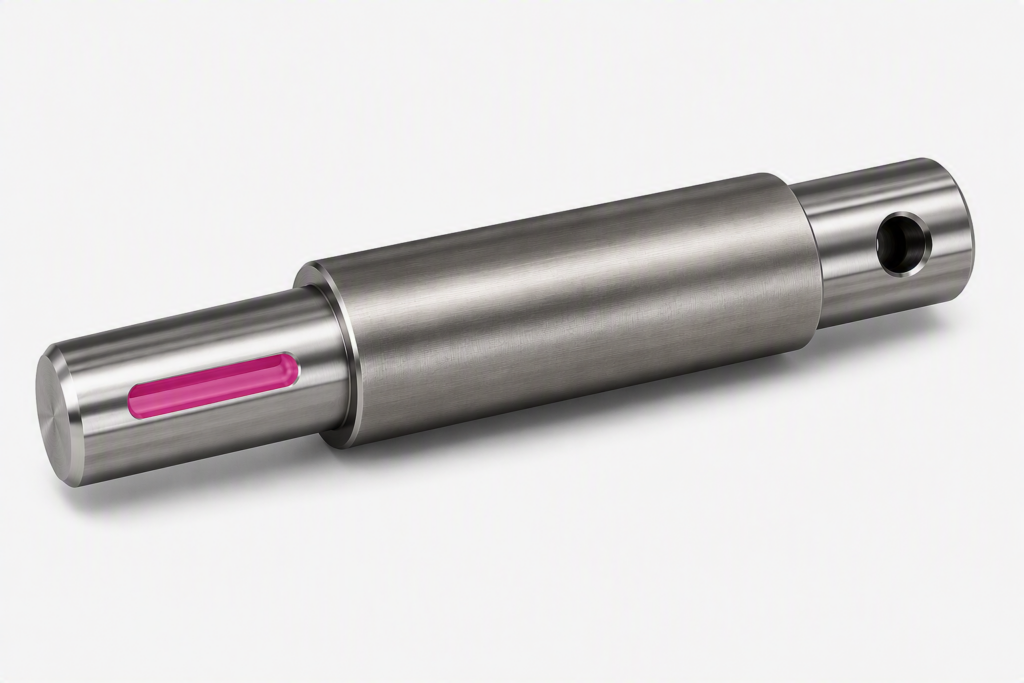
Application Details
- Component: Shaft, rough keyway machining
- Workpiece material: SCM420 / SCM430
- Machine: Turning center with a driven spindle
- Keyway width: 8 / 10 / 12 / 16 mm
Challenges with the Conventional Three-Process Method
- 1. Pilot-hole drilling with a flat drill
- 2. Rough slot machining with a four-flute roughing end mill
- 3. Peripheral finishing with a four-flute finishing end mill
- Three tools were required, resulting in considerable tool-changing and tool-management workload
VVFH Machining Conditions
- Drilling: Vc = 60 m/min, fz = 0.03 mm/t
- Lateral slot machining: ap = 3.5 mm, Vc = 100 m/min, fz = 0.07 mm/t
- Good results in both drilling and lateral feed machining
Improvement Results
| Conventional | VVFH + VSSD | |
|---|---|---|
| Tool and shank | ø9 roughing end mill, 4 flutes | VVFH1000S03R04S06 AH715 VSSD12L065S06-S |
| Feed per tooth fz | 0.05 mm/t | 0.07 mm/t |
| Overhang | 20 mm | 15 mm |
| Material removal rate | 22.28 cm³/min | 23.4 cm³/min |
| Number of processes | 3 processes | 2 processes, roughing + finishing |
| Number of tools required | 3 tools | 1 tool |
| Surface quality | Inferior | Good |
| Tool stability | — | Good |
POINT
Drilling and rough machining consolidated into a single VVFH tool
While retaining the peripheral finishing process,
the flat drill and roughing end mill were consolidated into a single VVFH tool.
The number of processes was reduced from three to two, and the number of required tools was reduced from three to one.
The overhang was also shortened from 20 mm to 15 mm, enabling a higher feed while improving surface quality.
Case 3
S45C Shaft Keyway: Single-Process Machining and Longer Tool Life Achieved Simultaneously
Application Details
- Component: Shaft for a diesel engine
- Workpiece material: S45C
- Machine: Lathe with a driven-tool spindle / external coolant supply
- Operation: ø8 keyway machining, 5 mm depth of cut and 58 mm machining length
Challenge
- The conventional method consisted of two processes: pilot-hole drilling with an ø8 drill, followed by slot machining with a competitor’s ø8 end mill
- Higher productivity through process integration was required
Cutting Condition Comparison
| Conventional Competitor Tool | VVFH + VSSD | |
|---|---|---|
| Tool and shank | ø8 end mill, 4 flutes | VVFH0800S03R04S05 VSSD10L055S05-S |
| Grade | AlCrN | AH715 |
| Cutting speed Vc | 60 m/min | 60 m/min |
| Depth of cut ap | 5 mm | 5 mm |
| Feed per tooth fz | 0.01 mm/t | 0.03 mm/t |
| Feed rate | 95 mm/min | 215 mm/min |
| Workpieces machined per head | 126 workpieces | 160 workpieces |
| Material removal rate | 3.82 cm³/min | 8.59 cm³/min |
| Number of processes | 2 processes, drilling + slot machining | Consolidated into 1 process |
| Surface quality | Good | Good |
POINT
Optimize the feed rather than simply reducing it
VVFH, with its drilling capability, was proposed to integrate the processes.
Cutting-edge chipping initially occurred when machining at the same low feed used for the competitor’s tool.
However, by
optimizing the feed to the recommended value of fz = 0.03 mm/t,
the number of workpieces machined increased from 126 to 160.
The material removal rate more than doubled, enabling
both process integration and longer tool life
and resulting in a successful tool changeover.
What the Three Cases Have in Common
Review the process, shank, and cutting conditions together rather than simply replacing the tool
In all three cases, the existing end mill was not simply replaced with VVFH.
The results were achieved by combining a
material change from HSS to carbide,
improved tool rigidity with a VSSD high-rigidity shank,
shorter tool overhang,
and
feed conditions suitable for VVFH.
Together, these measures enabled both process integration and longer tool life.
6. Use Different Conditions for Drilling, Slot Machining, and Peripheral Finishing
VVFH can perform multiple machining operations with a single tool, but this does not mean that every operation should use the same cutting conditions.
It is important to set suitable conditions for each machining operation.
Drilling
- Cutting speed during drilling
- Z-axis feed
- Drilling depth
- Whether peck feeding is required
- Coolant supply
- Chip-evacuation conditions
Slot Machining
- Feed per tooth
- Axial depth of cut
- Slot width
- Machining length
- Chip-evacuation conditions
- Chatter or abnormal noise
- Tool damage condition
Peripheral Shoulder Finishing
- Peripheral finishing allowance
- Radial depth of cut
- Feed per tooth
- Keyway width
- Shoulder dimensions
- Required corner radius
- Condition of the machined surface
IMPORTANT
Set optimal conditions for each machining operation
The direction and magnitude of the load applied to the tool differ between drilling, slot machining, and peripheral finishing.
VVFH performance can be maximized by
setting cutting conditions individually for each operation.
Summary: VVFH Changes the Conventional Approach to Shaft Keyway Machining
This article introduced the challenges of shaft keyway machining and the solutions provided by TungMeister VVFH.
The key points are summarized below.
- Shaft keyway machining presents a “number of tools versus toolpath length” dilemma:
ramping, drill-and-end-mill machining, and repeated shallow cutting each have advantages and disadvantages. - VVFH connects drilling, slot machining, and peripheral finishing with a single tool:
three center-cutting edges enable direct Z-axis entry followed by lateral feed. - Three technologies enable stable machining:
three center-cutting edges, 150% flute volume, and variable lead geometry. - Shank selection directly affects performance:
choose between the VSSD high-rigidity shank and the VER integrated collet shank according to the application. - Optimize cutting conditions for each machining operation:
set individual conditions for drilling, slot machining, and peripheral finishing. - Proven in customer applications:
results include a 69% reduction in machining time, reduced chatter, fewer tools, and fewer tool changes. - Replaceable-head design reduces running costs:
the shank can be reused.
If you are looking to improve your shaft keyway machining process, we invite you to try VVFH.